The LitWorld 7 Strengths Activities Pathway
11 minute read
The LitWorld 7 Strengths Activities are a collection of activities drawn from existing LitWorld programs, such as LitClub, LitCamp, LitFests, and LitCorps. These activities are grouped by duration and are designed to be used and implemented flexibly in any situation that requires a literacy activity.
Through LitWorld U, you will use the 7 Strengths Activities as a way to experience LitWorld’s strengths-based approach to programming. You will select activities based on your course goals, setting, available community partnerships, and your own inquiry interests. You may conduct these activities with children and young people, adapt these for peers or community members, or use these activities as a learner yourself.
We invite you to put the strengths into practice by observing how belonging, curiosity, friendship, kindness, confidence, courage, and hope can shape literacy and communities, as you complete your LitWorld U program.
At its heart, the 7 Strengths Literacy Activities Pathway asks:
What happens when literacy experiences are designed to help people recognize, practice, and strengthen the qualities that help them thrive?
What You’ll Do
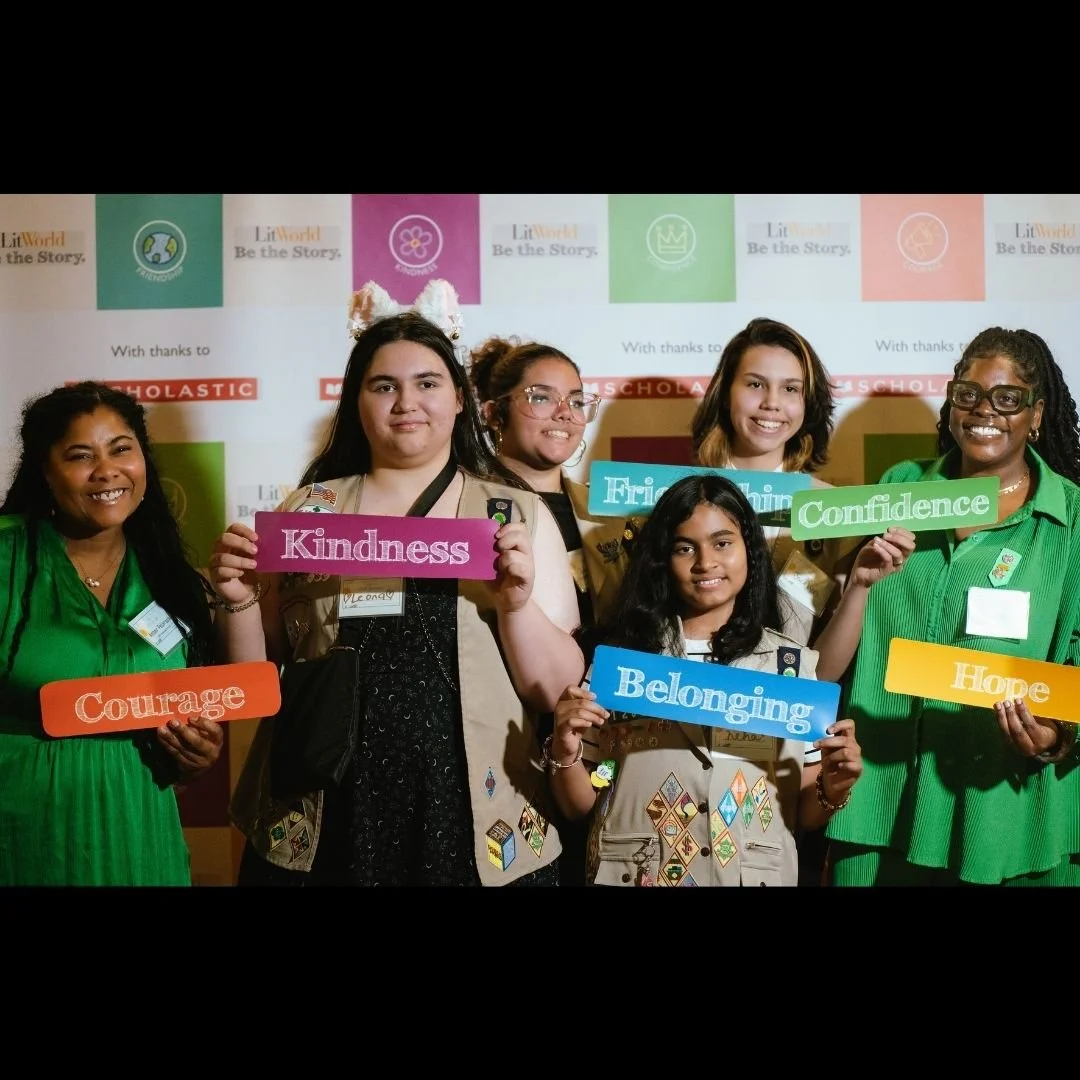
Literacy learning does not happen in isolation. How people feel about themselves, their relationships with others, and their sense of belonging can profoundly shape how they participate in learning.
LitWorld’s 7 Strengths approach connects literacy development with the social and emotional dimensions of learning. Through purposeful reading, writing, storytelling, discussion, and creative activities, students can develop literacy skills while also building the strengths that help them navigate relationships, challenges, and opportunities.
The 7 Strengths Literacy Activities provide opportunities to:
As a LitWorld U student, you will use The LitWorld 7 Strengths Activities to conduct a small-scale inquiry (questions below) connected to a community-based literacy experience. The specific details of your inquiry will be developed between you and your university faculty. Below are some options recommended by LitWorld:
Option A: Community-Based Practice
LitWorld U students partner with a LitWorld community partner, school, library, after-school program, or youth-serving organization to facilitate selected 7 Strengths Literacy Activities. With this option, you may facilitate individual activities or series of activities, adapt activities for different ages or learning environments, observe how participants respond and engage, collaborate with community educators or program leaders, and/or gather reflections and observations to inform your inquiry project.
Option B: Campus or Community-Based Practice
LitWorld U students facilitate selected 7 Strengths activities with university peers, student organizations, educators, or other community members. With this option, you may lead activities during class, facilitate a campus literacy or storytelling event, adapt activities for adult learners or university students, partner with a campus library or student organization, and/or compare how different participants experience the same activity.
Option C: Classroom-Based Practice
With this option, you will engage with the 7 Strengths activities during your university course. You may participate in activities as learners, analyze the design and purpose of selected activities, practice facilitating activities with classmates, adapt activities for a hypothetical or future learning environment, and/or design a new activity based on one of the 7 Strengths.
7 Strengths Inquiry Questions
You will select one Strength to investigate throughout your participation in this pathway. You may also explore how multiple strengths interact within a single literacy experience. See the below list of questions on which to conduct your small-scale inquiry project, or choose your own after consulting with your professor.
Belonging
How can literacy experiences help people feel seen, valued, and connected?
How do literacy activities create opportunities for participants to feel that they belong?
What makes a learning environment feel welcoming and inclusive?
How can books, stories, and shared experiences help people recognize themselves and others as valued members of a community?
Curiosity
How can literacy experiences inspire people to ask questions, explore ideas, and discover new possibilities?
What features of a literacy activity encourage curiosity and exploration?
How do open-ended questions and creative activities influence participation?
How can educators create environments where learners feel comfortable asking questions and pursuing their own interests?
Friendship
How can literacy activities strengthen relationships and create meaningful connections between learners?
How do collaborative literacy activities encourage connection and trust?
What role do relationships play in creating successful learning experiences?
How can reading, writing, and storytelling help people find common ground?
Kindness
How can literacy experiences cultivate empathy, compassion, and care for others?
How do literacy activities create opportunities to practice kindness?
How can stories and creative expression help learners understand perspectives different from their own?
What does a kind learning environment look and feel like?
Confidence
How can literacy experiences help learners find and use their voices?
What kinds of activities encourage learners to share their ideas and express themselves?
How does positive feedback influence participation and confidence?
How can strengths-based literacy practices help learners recognize what they already know and can do?
Courage
How can literacy experiences encourage learners to take risks, face challenges, and speak up?
What does courage look like in a literacy learning environment?
How can educators create safe opportunities for learners to try something new or difficult?
How can stories and creative expression help people explore challenging ideas and experiences?
Hope
How can literacy experiences help learners imagine possibility and believe in their capacity to shape the future?
How do stories and literacy activities create opportunities for hope?
What happens when learners are invited to imagine different possibilities for themselves or their communities?
How can educators use literacy to help learners see themselves as capable of creating change?
Reflection and Deliverable
In addition to your artifact project, we invite you to complete the following reflection questions at the end of your LitWorld U pathway.
Reflection
Which 7 Strength did you focus on, and why?
What did you observe about participants' engagement, participation, or responses?
How did the activity create opportunities for literacy learning?
How did the activity create opportunities to practice the selected Strength?
What surprised you about the experience?
What would you change or adapt if you facilitated the activity again?
What connections emerged between your experience and your inquiry question?
How has your understanding of strengths-based literacy changed?
Artifact
As part of this pathway, you will create one artifact that preserves or shares a collected memory:
Adapted 7 Strengths Lesson Plan
Original 7 Strengths Literacy Activity
Activity Facilitation Guide
Reflective Practice Portfolio
Literacy Activity Observation Report
Video or Multimedia Reflection
Student Learning Artifact
7 Strengths Classroom Toolkit
Community Literacy Resource
Mini Research Brief
7 Strengths Program Proposal
Suggested Reading List
The 7 Strengths and Strengths-Based Learning
Every Child a Super Reader by Pam Allyn and Ernest Morrell
Selected LitWorld resources on the 7 Strengths and strengths-based literacy
LitWorld 7 Strengths Literacy Activities collection
Literacy and Social-Emotional Learning
The Heart of Education: A Study of Relationships Between Teachers and Students by Sarah J. Thompson
The Emotional Life of Your Brain by Richard J. Davidson and Sharon Begley
Selected research on social-emotional learning, literacy, and student engagement
Literacy, Identity, and Belonging
The Stories We Live By by Dan P. McAdams
Selected contemporary children's and young adult literature exploring identity, belonging, friendship, courage, and hope
Children's Literature and Learning
As part of this pathway, you should read a selection of contemporary picture books, middle-grade, and/or young adult literature representing diverse authors, cultures, identities, and lived experiences. Consider how these texts create opportunities for readers to explore the 7 Strengths and connect literacy with their own lives and communities.
Practice-Based Learning
We recommend you explore selected readings on experiential learning, reflective practice, and community-based learning and consider how direct engagement can deepen academic understanding.

30 Minute Belonging Activities
The 7 Strengths Literary Activities

60 Minute Belonging Activities

30 Minute Hope Activities
15 Minute Belonging Activities
15 Minute Confidence Activities
If You Have Fewer Than 15 Minutes, try…
15 Minute Friendship Activities
15 Minute Courage Activities
If You Have Approximately 30 Minutes, try…
30 Minute Friendship Activities
30 Minute Kindness Activities
If You Have 60 Minutes or More, try…
60 Minute Friendship Activities
15 Minute Curiosity Activities
30 Minute Curiosity Activities
60 Minute Curiosity Activities
15 Minute Kindness Activities
30 Minute Courage Activities
60 Minute Kindness Activities
60 Minute Courage Activities
15 Minute Hope Activities
30 Minute Confidence Activities

60 Minute Confidence Activities
60 Minute Hope Activities